
Introduction and Industry Context
The automotive industry is currently navigating its most significant transformation since the introduction of the electric starter motor in 1912.
For over a century, the 12-volt lead-acid battery has served as the silent, reliable backbone of the internal combustion engine (ICE) vehicle. It is a technology so ubiquitous that it is often treated as a commodity—a black box expected to function without thought or maintenance. However, the modern vehicle has evolved into a rolling computer, placing unprecedented demands on this legacy energy storage system. The proliferation of Start-Stop technology, Advanced Driver Assistance Systems (ADAS), by-wire steering, and always-on connectivity has pushed lead-acid chemistry to its theoretical performance limits.
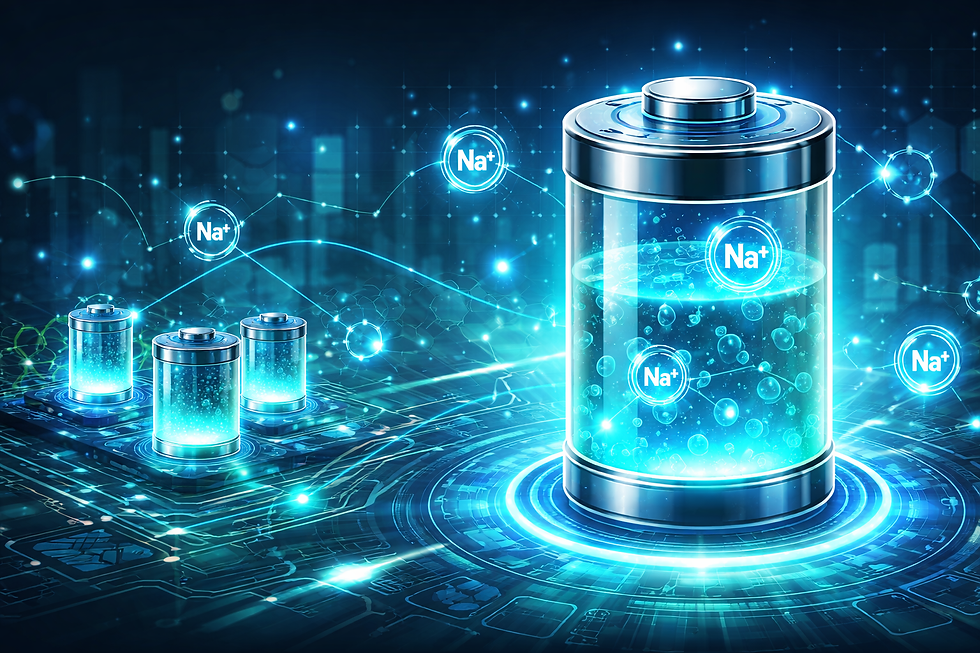
Into this technological vacuum enters Sodium-Ion (Na-ion or SIB) battery technology. Often misunderstood as merely a "cheaper lithium" or a scientific curiosity, Sodium-Ion represents a fundamental shift in how automotive low-voltage systems are engineered, sold, and maintained. It promises to bridge the immense gap between the low cost of lead-acid and the high performance of lithium-ion, without the safety risks or supply chain volatility associated with the latter.
This report serves as a comprehensive handbook for sales professionals and industry stakeholders. It assumes zero prior technical knowledge of electrochemistry, building from the fundamental physics of electricity up to complex total cost of ownership (TCO) models. By analyzing the critical distinctions in Depth of Discharge (DoD), State of Charge (SoC), and thermal resilience, this document will equip representatives with the expertise required to articulate the value of Sodium-Ion technology as it enters the 12V and 24V automotive space.
The analysis draws upon the latest technical specifications from market leaders such as Clarios, CATL, and Unigrid, alongside academic data on battery failure modes and transport regulations.

Comments